Thinking about upgrading a waterfront property in Annapolis or Anne Arundel County? The best outdoor spaces here do more than frame a beautiful view. They also respond to wind, sun, flooding, shoreline rules, and long-term durability. If you want ideas that feel elevated but still make sense for Chesapeake Bay conditions, this guide will help you think through smart, site-sensitive options. Let’s dive in.
Start With a Layered Outdoor Plan
On Eastern Shore-style waterfront homes, the strongest outdoor living plans often work in layers instead of one large hardscaped space. That approach fits local conditions, especially where floodplain concerns, shoreline exposure, and Critical Area rules shape what can go where.
A practical layout often begins with a sheltered space close to the house, then moves outward to a deck or terrace, planted areas, and finally shoreline access. This creates a smoother transition from indoor living to the water while giving each zone a clear purpose.
Build Comfort Near the House
The most comfortable gathering spaces are usually the ones that sit closest to the home. Covered porches, screened rooms, and protected terraces give you shade and weather protection without blocking the view.
That matters in Maryland’s warming climate, where vegetated areas stay cooler than hardscape and exposed waterfront lots can feel bright, hot, and windy. A sheltered first layer gives you a reliable space to use across more of the year.
Keep the View Without Overbuilding
Waterfront design is not just about adding more square footage outside. It is about placing outdoor rooms where they support circulation, views, and everyday use.
Instead of one oversized platform, many properties benefit from a few well-placed spaces with clear connections between them. That can make the site feel more refined and often more responsive to local constraints.
Choose Outdoor Features That Fit the Site
Not every feature belongs at the water’s edge. On Annapolis-area waterfront lots, the best outdoor amenities are usually the ones matched carefully to exposure, drainage, and permitting realities.
A thoughtful plan can still include many of the features homeowners want most. The key is deciding which elements belong near the house and which should be coordinated more carefully with shoreline conditions.
Covered Porches and Screened Rooms
Covered porches and screened rooms are a natural fit for waterfront homes. They preserve openness and views while giving you relief from glare, wind, and changing weather.
They also create a durable middle ground between interior living and fully exposed outdoor space. For homeowners who want comfort without losing the feeling of being connected to the water, this is often one of the smartest investments.
Decks and View Terraces
Decks and terraces work best as view-oriented circulation spaces and gathering areas. In Annapolis, deck plans must show framing, hardware, stairs, and materials, which reinforces that these spaces are structural projects, not simple finish upgrades.
That is important when you are planning a renovation or custom home. A deck should be designed as part of the architecture and site strategy, not added as an afterthought.
Outdoor Kitchens and Dining Areas
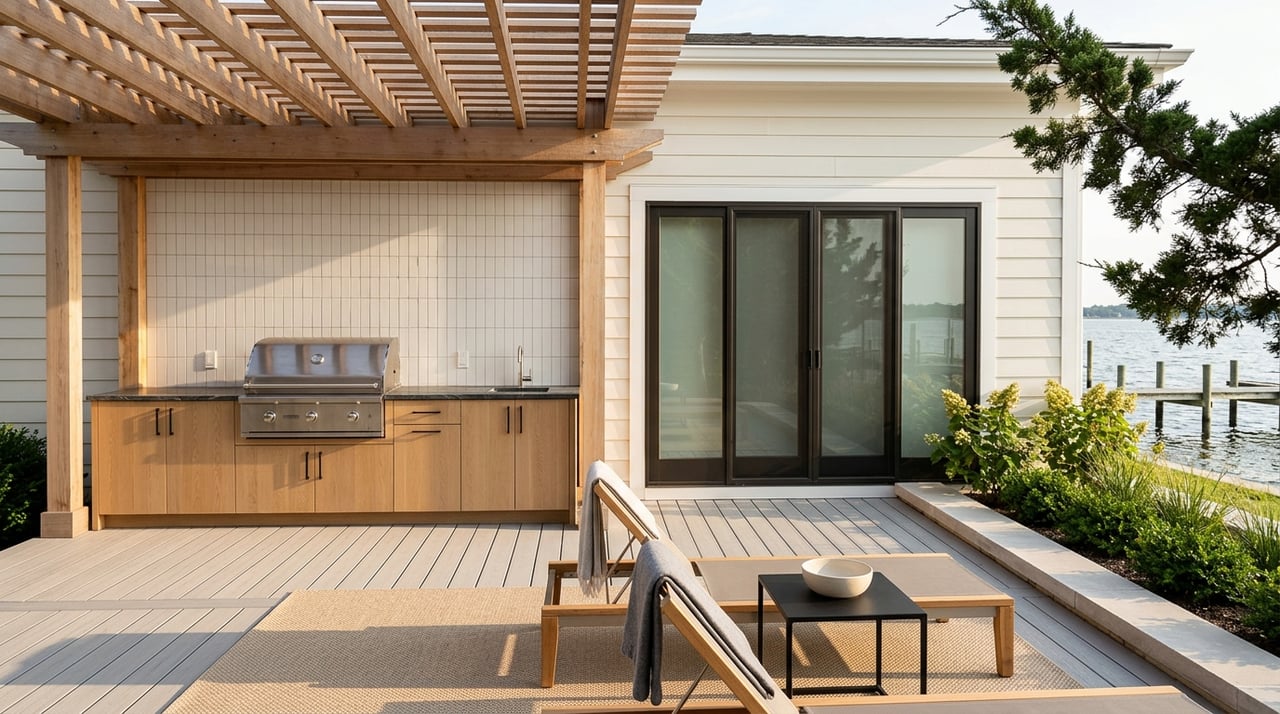
Outdoor kitchens, dining spaces, and fire features usually make the most sense near the house, especially when paired with a covered porch or terrace. These areas tend to perform better when they are somewhat protected from salt, wind, and moisture.
In a coastal setting, durability matters as much as layout. The more exposed a space is, the more carefully finishes, appliances, and hardware need to be selected.
Pools on Waterfront Lots
A pool can work on a waterfront property, but it should be treated as a secondary amenity during planning. In Anne Arundel County, floodplain and Critical Area constraints should be checked early so the pool layout does not create conflicts with setbacks, drainage, or shoreline access.
In other words, a pool may be possible, but the site should lead the design. Early feasibility work can help you avoid expensive revisions later.
Plan Docks and Piers Early
For many waterfront owners, the dock or pier is one of the property’s most important features. It is also regulated differently from a backyard deck, which means it should be part of the planning conversation from the start.
Maryland notes that residential pier setbacks are controlled by the local agency, a pier cannot cross property lines, and the main walkway is generally limited to 6 feet over open water or 3 feet over vegetated wetlands. Pier length is also limited, so layout decisions need to be coordinated carefully.
Coordinate Shoreline Access With the Full Site Plan
Dock work, shoreline stabilization, grading, and access paths should be considered together. Maryland requires permit review for work below the average high tide line in tidal wetlands or tidewater, and residential pier changes also require review.
That makes it risky to treat shoreline projects as separate small jobs. A coordinated plan is usually the better path for function, permitting, and long-term value.
Use Materials That Hold Up Near Water
Waterfront homes demand a different mindset when it comes to exterior materials. Salt, moisture, and wind can shorten the life of exposed components, especially if the wrong hardware or finish systems are used.
For that reason, the most successful outdoor spaces often pair refined design with resilient construction choices. Luxury and practicality do not compete here. They need to work together.
Prioritize Corrosion Resistance
FEMA’s coastal construction guidance notes that metals corrode faster near the ocean and recommends hot-dip galvanized or stainless steel hardware. It also warns against joining dissimilar metals because of galvanic corrosion.
For outdoor living areas, that affects railings, fasteners, connectors, kitchen components, and dock hardware. Material choices that look similar at installation can perform very differently over time.
Design Lower Areas for Easy Recovery
In lower or more exposed parts of the site, the most resilient approach is often the simplest one. Choose finishes and assemblies that are easy to drain, easy to clean, and easy to repair.
That strategy aligns with coastal construction guidance and Maryland floodplain rules that emphasize exposure, elevation, and flood risk. In the most vulnerable zones, replaceable and durable materials usually outperform delicate finish selections.
Let Landscaping Do More Work
On a waterfront property, landscaping is not just decoration. It can help cool the site, soften transitions, support privacy, and work with shoreline resilience goals.
This matters even more in Anne Arundel County, where shoreline vegetation and Critical Area rules directly affect what can be removed, replaced, or disturbed. A landscape plan should support outdoor living, not fight against regulations.
Use Native Planting in Layers
Layered native planting can create a softer progression from the house to the shoreline. It can also support privacy and help the site feel more integrated with the surrounding environment.
Anne Arundel County states that vegetation removal in the Critical Area requires approval and replacement planting with native species. That means view clearing is not simply a design choice. It is a regulated one.
Think Beyond Bulkheads
Maryland DNR says most private shoreline property owners should use nonstructural, environmentally friendly erosion control methods, such as marsh plantings and natural vegetation, rather than bulkheads or riprap, where conditions allow. Living shorelines can help reduce erosion and flooding while maintaining shoreline processes.
Anne Arundel County also notes that natural shorelines can help filter runoff, provide habitat, create privacy, and buffer noise. Because erosion solutions are site-specific, a customized assessment is often necessary before final design decisions are made.
Know the Local Planning Rules First
Before you commit to a new porch, terrace, pool, or shoreline feature, the first question is usually where the site sits in relation to the Critical Area and floodplain. Those two factors shape what is feasible and how the project should be designed.
In Anne Arundel County, the Critical Area includes land and water within 1,000 feet of tidal waters or wetlands, and the 100-foot buffer generally requires approval before disturbance. In Annapolis, development review also addresses floodplain regulations intended to reduce flood damage and maintain floodplain function.
Flooding Is a Design Condition
In Annapolis, recurring high-tide flooding is a current condition, not a rare event. The city’s 2025 nuisance flood plan reports 25 days at the minor flood threshold in 2024.
That reality should shape how you think about outdoor living. Flexibility, elevation, and material durability are not extras on a waterfront site. They are part of good planning.
Plan for Changing Water Levels
State and regional guidance points to continued sea-level rise along Maryland’s shoreline. UMCES projected in 2023 that sea level will very likely rise one foot between 2000 and 2050 and could rise a foot and a half.
For homeowners, that supports a design mindset focused on adaptation. It is not just about what looks good today, but what will remain usable and sensible over time.
Why a Feasibility-First Approach Matters
Waterfront projects often look straightforward from the patio but become more complex once permitting, structural design, and shoreline conditions enter the picture. That is why a phased planning process can be so valuable.
Starting with feasibility helps you test layout ideas against site constraints before you invest heavily in design development or construction documents. For high-value waterfront homes, that early discipline can protect both the design intent and the budget.
If you are considering a custom home, a major renovation, or a substantial outdoor living upgrade on the Annapolis or Anne Arundel waterfront, principal-led planning can make a real difference. To explore a thoughtful, design-forward approach, connect with Chesapeake Custom Homes & Development.
FAQs
What outdoor living features work best for Annapolis waterfront homes?
- Covered porches, screened rooms, view decks, protected dining areas, and carefully planned shoreline access often work best because they respond well to sun, wind, and moisture exposure.
What should homeowners know about Anne Arundel Critical Area rules?
- The Critical Area includes land and water within 1,000 feet of tidal waters or wetlands, and disturbing the 100-foot buffer generally requires approval.
What should homeowners know about docks and piers in Maryland?
- Residential piers are subject to local setback control, cannot cross property lines, and must meet state and local permit requirements for length, width, and walkway dimensions.
Can you add a pool to a waterfront home in Anne Arundel County?
- Yes, in some cases, but it should be reviewed early against floodplain and Critical Area constraints so it does not conflict with drainage, setbacks, or shoreline access.
Why are living shorelines important for waterfront properties?
- Where site conditions allow, living shorelines can help reduce erosion and flooding while supporting a more natural shoreline edge and improving the transition between land and water.