Building on Maryland’s Eastern Shore can look simple from the outside. You find a beautiful lot, picture the views, and start imagining the house. In reality, the land often sets the rules before the design ever begins. If you are planning to build in Annapolis or elsewhere in Anne Arundel County, understanding those rules early can save you time, cost, and frustration. Let’s dive in.
Start with the lot, not the floor plan
Before you fall in love with a house design, you need to know what the site can support. On the Eastern Shore and in waterfront areas around Annapolis and Anne Arundel County, the biggest early questions usually involve the Critical Area, wetlands, floodplain conditions, and utility constraints.
Maryland’s Critical Area includes land within 1,000 feet of tidal waters and tidal wetlands. The first 100 feet is a regulated buffer. If your lot is near the shoreline, that can affect where you build, what you can clear, and whether added approvals are needed.
Anne Arundel County can help confirm whether a parcel is in the Critical Area by address or tax account number. The county also notes that full buildability may not be clear until a development or building permit application is submitted. That is why an early feasibility review matters so much.
Check wetlands and shoreline limits early
If your lot is on or near the water, wetlands and waterways rules may shape the project. Maryland regulates work such as new piers, boat lifts, bulkheads, fill in a wetland or buffer, and stream crossings or utility lines under streams.
This means your plans for the home and your plans for the shoreline should be considered together. A site may look open on paper, but regulated features can narrow what is practical.
Review floodplain conditions before design starts
Flood risk is another issue to review at the start. A lot in a moderate-risk area can still face flood loss risk, while high-risk flood zones may require flood insurance if you use a federally backed loan.
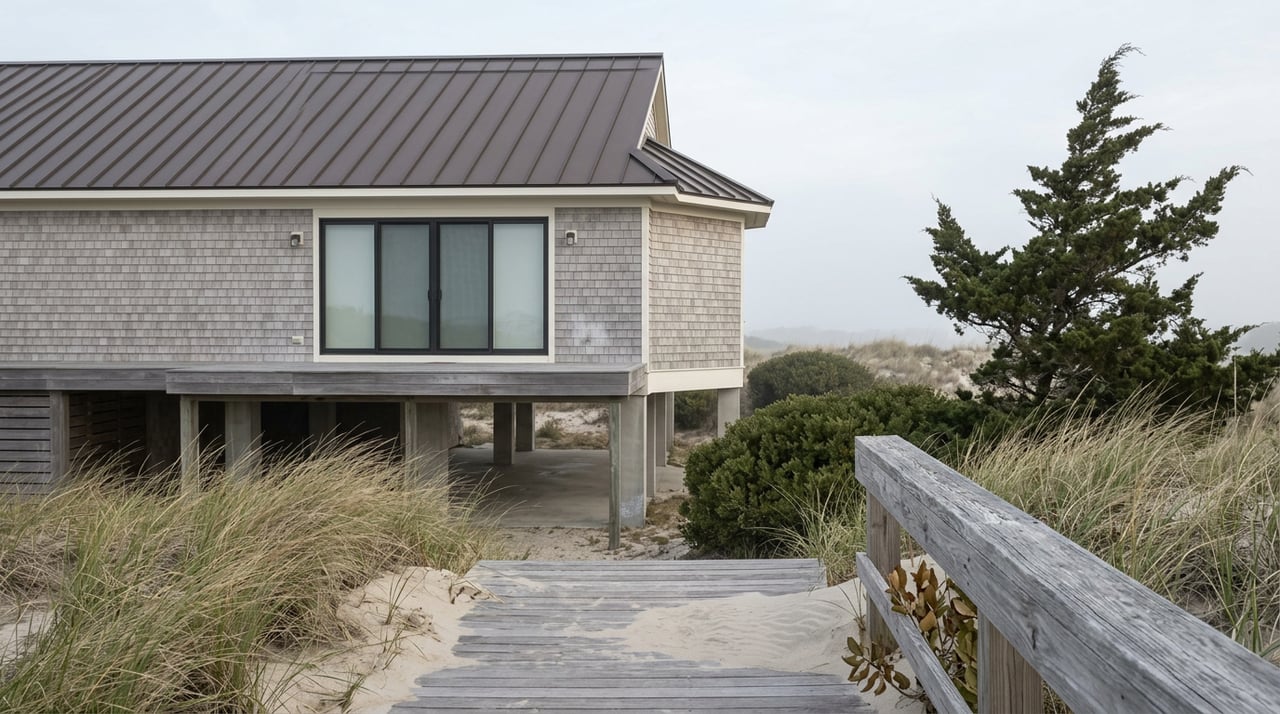
Floodplain rules also affect construction itself. New structures in flood zones may need to be elevated above base flood elevation and include compliant venting and flood-resistant detailing.
Think about orientation, not just views
A waterfront lot often pulls your attention toward the best view corridor. That makes sense, but house orientation still matters for comfort and efficiency.
The U.S. Department of Energy notes that passive-solar performance depends on site and climate, including unobstructed solar exposure on part of the south side and future shading. On a tight lot, the best place for views may not be the best place for daylight or energy performance, so these decisions should be weighed together.
Expect more than one approval path
Building in this part of Maryland often means working through more than one layer of review. State rules, county permitting, and local boards can all play a role depending on the property.
Maryland’s building code framework is based on statewide standards, including the International Building Code, International Residential Code, and International Energy Conservation Code, with local modifications allowed. In Anne Arundel County, permits move through Land Use Navigator, and development staff handles Critical Area questions before submittal.
The key point is simple: the process is rarely just one permit and one office. The sooner you understand the review path, the easier it is to plan your schedule and budget.
Local boards may affect the timeline
In Annapolis, some properties may face an added layer of review. The Historic Preservation Division reviews exterior changes in the historic district and issues an administrative Certificate of Approval before the building permit is approved.
Annapolis also lists Port Wardens among the boards that support planning, zoning, and building decisions. If your property has historic or waterfront considerations, those reviews can affect the sequence and timing of approvals.
Inspections come after permit issuance
Once the permit is issued, construction can begin. But that does not mean the approval process is over.
Anne Arundel County requires the permit holder to request inspections at the required stages of work. Missing or delaying those inspections can interrupt progress, so they should be built into the construction plan from day one.
Wells, septic, and utilities can make or break a lot
One of the most common mistakes in early planning is assuming that utility access is straightforward. On the Eastern Shore and in less densely served areas, a lot may depend on private systems rather than public water and sewer.
That is why utility due diligence should go beyond checking whether electric service is nearby. You also need to know whether the property is served by public systems or whether it will rely on a private well, septic system, or additional district-level approvals.
Septic review may come before design decisions
In Anne Arundel County, properties served or proposed to be served by a private onsite sewage system require a perc-test application. A septic installation permit is also required for any onsite sewage disposal system.
The county health department also says that parcels within 1,000 feet of a waterway or within the Critical Area should contact Planning and Zoning before filing an application to construct. If a well is placed within the 100-foot buffer, a grading permit or variance may also be required.
Well approvals need time too
If a lot depends on a private well, that process also requires planning. While procedures can vary by county, the larger lesson is the same: well and septic approvals are not side tasks to handle later.
They often shape the site plan, house placement, and construction timeline. If those issues are discovered too late, redesigns can follow.
Coastal design should account for flood risk
A coastal home needs more than a strong visual concept. It also needs detailing that responds to water, wind, runoff, and changing site conditions.
Maryland requires that development in mapped floodplains must not increase flooding. Elevated structures must be built to the Flood Protection Elevation, with proper venting and elevated mechanical and electrical equipment.
That has direct design and cost implications. Floor heights, stairs, foundation detailing, equipment placement, and insurance expectations should all be discussed early.
Elevation affects both design and budget
If a home must sit higher, that decision will influence the full project. It can change the exterior proportions, the entry sequence, the grading plan, and the amount of foundation work required.
It can also affect what you budget for insurance and resilience upgrades. Standard homeowner’s insurance does not cover flood damage, so flood exposure is not just a permitting topic. It is a long-term ownership topic too.
Living shorelines are often preferred
If shoreline stabilization is part of your plan, Maryland’s rules favor nonstructural approaches when feasible. The state says living shorelines are preferred, while structural shoreline projects generally require a waiver.
That matters if you are considering a bulkhead or other hardened edge treatment. A shoreline strategy should be reviewed early so the site plan and permitting path stay aligned.
Stormwater planning belongs in the first round
Anne Arundel County says new development projects in the state must manage runoff using Environmental Site Design to the Maximum Extent Practicable. In a coastal setting, that makes drainage, grading, and stormwater planning part of the design brief from the beginning.
Maryland’s climate guidance also warns of higher temperatures, increased flooding, shifting precipitation, rising sea levels, and more frequent and intense storms. On the Eastern Shore, resilience is not an upgrade. It is part of responsible planning.
A smarter way to plan your build
When you build in Annapolis or on Maryland’s Eastern Shore, the best early move is not choosing finishes or even finalizing the floor plan. It is confirming what the land, the regulations, and the infrastructure will allow.
That is where a disciplined feasibility phase adds real value. By reviewing site constraints, approvals, utility realities, and flood-related requirements up front, you can make better design choices and avoid expensive surprises later.
For design-forward homes in complex coastal settings, process matters as much as vision. If you want a principal-led team that can help you think through feasibility, design coordination, and the path to construction, Chesapeake Custom Homes & Development is here to help.
FAQs
How can you tell if a lot in Anne Arundel County is in the Critical Area?
- Anne Arundel County staff can help confirm whether a parcel is in the Critical Area by address or tax account number, though full buildability may not be clear until a permit application is filed.
What should you check first before building near the water in Annapolis?
- You should review Critical Area limits, wetlands, floodplain conditions, and utility service early, because each can affect where and how you can build.
Do you need a perc test before building on a private septic system in Anne Arundel County?
- Yes. Anne Arundel County says properties served or proposed to be served by a private onsite sewage system require a perc-test application.
Can a waterfront lot in Annapolis need extra board or commission review?
- Yes. Depending on the property, local review may involve planning and zoning, historic preservation, and waterfront-related boards such as Port Wardens.
What flood-related design issues matter when building on Maryland’s Eastern Shore?
- Key issues include required elevation, compliant venting, flood-resistant detailing, and keeping mechanical and electrical equipment elevated where required.
Is a living shoreline preferred over a bulkhead in Maryland?
- In many cases, yes. Maryland says nonstructural living shorelines are the preferred shoreline stabilization approach when feasible, while structural projects generally require a waiver.