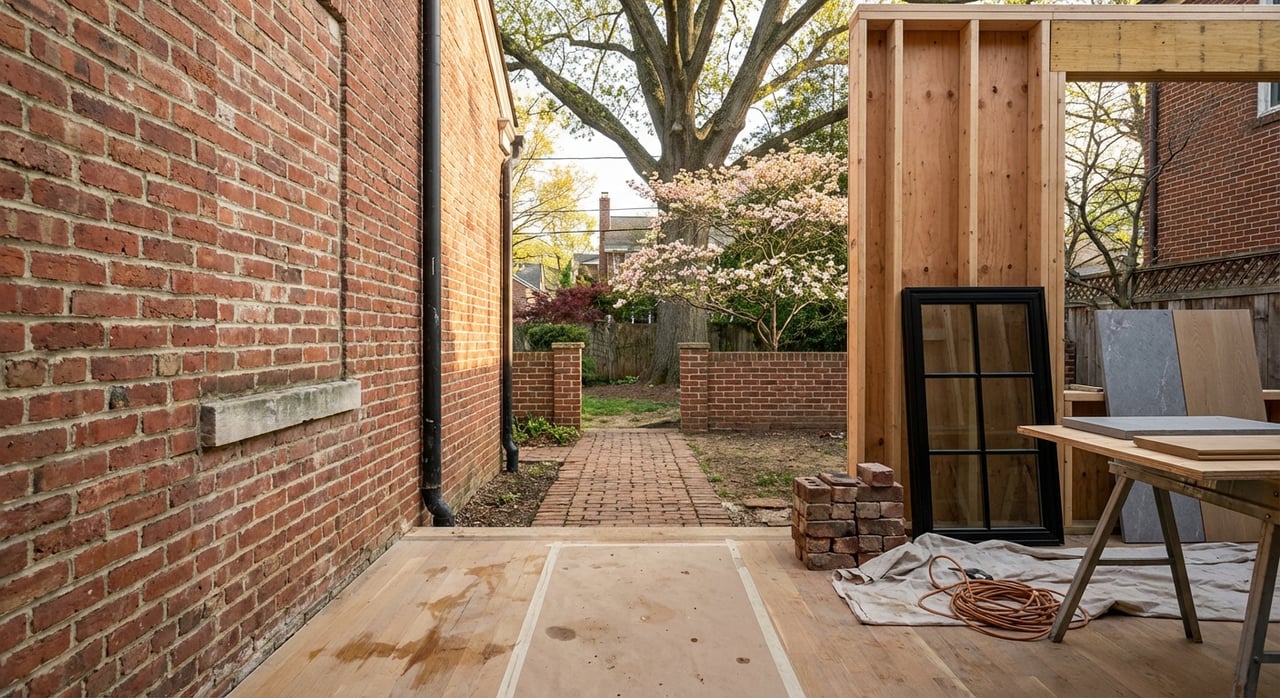
Torn between a gut renovation and a brand‑new custom build in Chevy Chase? You are not alone. Between zoning, tree rules, and permitting, the path is not always obvious. In this guide, you will learn how local rules, costs, and timelines shape your options so you can move forward with clarity. Let’s dive in.
Start with the legal line
In Montgomery County, the difference between a major remodel and a teardown is specific. If your project will leave less than 33% of the first‑story exterior walls, the County treats it as a demolition that requires a demolition permit, utility disconnects, asbestos handling, a bond, and a 10‑day notice period. Review the County’s guidance on what counts as demolition to avoid surprises. You can find those details on the County’s page for residential demolitions.
If you keep most exterior walls, you are likely in the alteration/addition path. Many alteration applications that are well prepared can be reviewed quickly, with timelines the County notes at 3 to 17 business days for code review. See the County’s residential alterations process for scope and timing.
Many Chevy Chase addresses also sit inside small municipalities. The Town of Chevy Chase, Chevy Chase Village, Sections 3 and 5, Martin’s Additions, and North Chevy Chase may have their own approvals. For example, the Town requires a tree protection plan and may require a water drainage plan when you add 700 square feet or more of impervious surface. Check the Town’s building and permitting guidance early if your property is in those limits.
Zoning and what will actually fit
Your lot’s zoning controls how big you can build. Many single‑family lots in Chevy Chase fall within zones like R‑60, where the standard‑method minimum lot area is 6,000 square feet. Setbacks, lot coverage, and height limits define your buildable envelope and whether a new home could be meaningfully larger than the existing one. Start by confirming your zoning and reviewing the County’s zoning legend.
Some parcels qualify as infill, which can tighten lot coverage to preserve neighborhood character. If you are on a pre‑1978 plat or a smaller lot, check the County’s infill development rules. These standards can materially affect whether a teardown delivers more square footage or just a different plan within similar limits.
Cost and timeline reality
Costs vary with scope and finishes, but local ranges help set expectations:
- Gut renovation: Local guides report whole‑home gut projects in the DC area often start near $100 per square foot and commonly reach $150 to $300+ per square foot with structural changes and high‑end kitchens and baths. Plan a 10 to 20% contingency for unknowns in older homes. See DC‑area benchmarks from Sweeten’s cost guide.
- Teardown + custom build: New custom homes in high‑cost markets frequently run from the low to mid hundreds per square foot to $300 to $500+ per square foot for high‑end work. Timelines are usually 9 to 18 months from design through completion. Industry context is summarized in this new build overview.
For timing, a full gut renovation often completes in several months to a year, depending on design, scope, and permitting. A new build, especially with municipal reviews, tree mitigation, and stormwater controls, generally takes longer. For new builds, carry a 15 to 25%+ contingency to cover site work, utility coordination, and required mitigation.
Site and tree constraints that shape the answer
Chevy Chase is known for mature trees and careful stormwater management. These features protect neighborhood character and can also shape your design.
- Trees and forest conservation: Montgomery County implements a Forest Conservation Law that can require inventories and mitigation. The Town of Chevy Chase also requires a tree protection plan and regulates tree removal. Explore the County’s tree and forest programs and the Town’s permitting guidance to see what might apply.
- Stormwater and site disturbance: The Town requires a water drainage plan when you add 700 square feet or more of impervious area. At the County level, larger site disturbances can trigger sediment control permits and stormwater measures. The County’s demolition guidance notes sediment control requirements at certain disturbance thresholds.
These rules can reduce the practical footprint of an addition, drive the placement of a new foundation, or add time and cost to either path.
When a gut renovation makes sense
Consider a transformative gut renovation if:
- The foundation and primary structure are sound, and you do not need a much larger envelope than zoning allows today.
- You want to move faster than a full tear‑down, or you want to keep exterior character while upgrading systems, layouts, and finishes.
- You can keep at least 33% of the first‑story exterior walls, which helps you avoid the County’s demolition permit path and its added steps. Review the demolition threshold as you scope work.
If you uncover major foundation problems, renovation economics can change quickly. Underpinning can cost tens of thousands of dollars, which is why severe structural issues often tip the decision toward rebuilding. See typical underpinning ranges in this foundation cost overview.
When a teardown and new build makes sense
A full replacement home is often the better route if:
- The existing foundation or structure is compromised, or reworking it would outstrip the value of a clean new build.
- Zoning and site conditions allow a significantly larger or better‑proportioned house than the current one.
- You want a completely different floor plan, higher ceilings, and modern mechanical systems without the constraints of an older shell.
Just weigh the tradeoffs. Expect a longer schedule, higher total budget, tree and stormwater obligations, and more municipal and neighbor coordination.
A simple decision flow for Chevy Chase
Use this quick sequence to decide your path with confidence:
- Confirm zoning and the buildable envelope. Pull your zone, setbacks, lot coverage, and height from the County’s zoning legend. If your lot qualifies as infill, review the County’s infill rules.
- Check municipal requirements. If your home is in the Town of Chevy Chase, review its building and permitting page for tree plans, drainage triggers, and submittal steps.
- Measure the demolition threshold. If your scope leaves less than 33% of first‑story exterior walls, you must follow the County’s demolition process.
- Order site intel. Commission a boundary and topographic survey, a tree inventory, and a structural assessment. These documents set realistic footprints and flag hidden costs.
- Get two feasibility budgets. Ask an architect and builder for side‑by‑side budgets for a gut renovation and a new build. Break out foundation work, tree mitigation, stormwater, right‑of‑way items, and permit costs for an apples‑to‑apples view. For reno pricing context, see DC remodel ranges. For new build context, review custom build costs and timelines.
- Set contingencies and schedule. Carry 10 to 20% contingency for renovation unknowns and 15 to 25%+ for new build site variables. Plan several months to a year for a gut renovation and 9 to 18 months for a new build.
Historic properties need extra care
If your home is designated on the County’s Master Plan for Historic Preservation or located in a historic district, exterior changes and demolition may require a Historic Area Work Permit and review by the Historic Preservation Office. Start early with the County’s historic permit guidance.
How we can help, step by step
You do not need to map this alone. At Chesapeake Custom Homes & Development, we take a phased, transparent approach so you can choose the right path before you commit to a full design or construction contract.
- Feasibility first. We confirm zoning, evaluate the 33% demolition threshold, and coordinate a survey, structural review, and tree assessment.
- Design‑assist budgeting. We collaborate with your architect and interior designer to refine scope and align the program with your target budget, using fixed‑price or percentage‑based contracting depending on your preference for certainty or flexibility.
- Value engineering and procurement. We price options, plan for stormwater and tree mitigation, and sequence municipal approvals to avoid delays.
- Principal‑level oversight. You work directly with our leadership for clear decisions, crisp schedules, and a smooth build—whether it is a transformative renovation or a new custom home.
Ready to compare scenarios for your Chevy Chase property with real numbers and a clear plan? Reach out to Chesapeake Custom Homes & Development to Schedule a Feasibility Consultation.
FAQs
What counts as a demolition in Montgomery County for Chevy Chase projects?
- If less than 33% of first‑story exterior walls remain, the County treats the job as a demolition that requires a demolition permit, utility disconnects, asbestos handling, a bond, and a 10‑day notice period.
How much does a gut renovation cost in the DC area?
- Whole‑home guts often start near $100 per square foot and commonly range from $150 to $300+ per square foot depending on structure and finishes.
How long does a new custom build take in Chevy Chase, MD?
- A typical timeline is 9 to 18 months from design through completion, with added time possible for municipal reviews, tree mitigation, and stormwater requirements.
Do I need town approvals in Chevy Chase in addition to County permits?
- Many Chevy Chase addresses fall within municipalities that require their own reviews; for example, the Town of Chevy Chase requires tree protection plans and drainage plans above a 700 square foot impervious increase.
What tree rules could impact my project in Chevy Chase?
- Montgomery County’s Forest Conservation Law and local town ordinances can require tree inventories, protection plans, and mitigation or replacement plantings that affect design and cost.
What is the R‑60 zone and why does it matter for my project?
- R‑60 sets a minimum lot area of 6,000 square feet and includes setbacks, lot coverage, and height limits that define your buildable envelope, and infill rules may further reduce coverage on some lots.