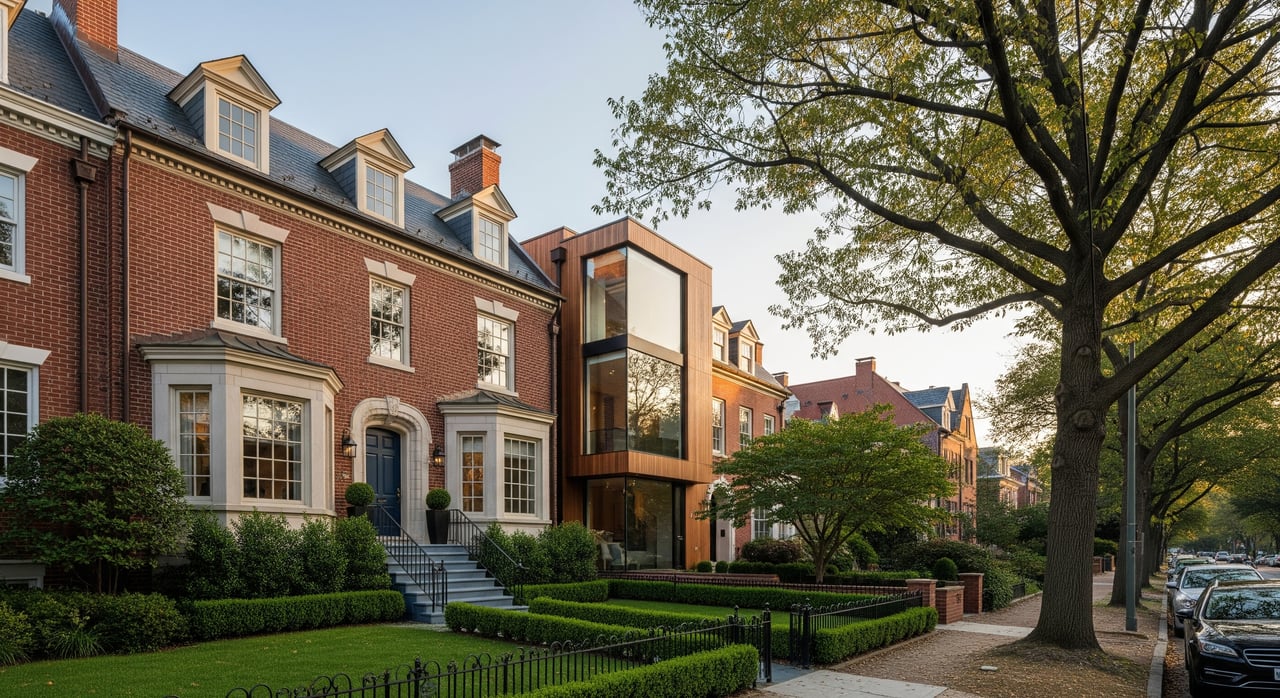
Thinking about transforming your 20016 home but unsure if you should renovate or start fresh with a new build? You are not alone. With tight lots, potential historic oversight, and high neighborhood values, the right path in NW DC is rarely obvious. In this guide, you will learn how local rules shape what you can build, how to weigh timelines and costs, and how to make a confident decision that fits your goals. Let’s dive in.
What controls your options in 20016
Your project scope in NW DC is shaped by zoning, building codes and permits, and sometimes historic review. These rules determine size, placement, and the level of review required before you build.
- Zoning basics to verify: allowed floor area ratio (FAR), maximum lot occupancy, height limits, and front, rear, and side setbacks. Accessory structures and accessory dwelling units have specific rules as well.
- Relief pathways: if you need more than current zoning allows, special exceptions or variances are handled by the Board of Zoning Adjustment.
- Historic context: many NW DC blocks include areas with historic protections. Exterior changes and any demolition in designated districts may require concept and final approval from the Historic Preservation Office and Historic Preservation Review Board.
- Public space and utilities: curb cuts, driveways, scaffolding, sidewalk work, and dumpsters require public space permits. Water and sewer connections or relocations are reviewed by the local utility. These steps affect timing and logistics.
- Trees and stormwater: large trees require protection or removal permits, and adding impervious area can trigger stormwater management measures on site.
- Permits: you will likely need building, structural, mechanical, electrical, and plumbing permits. Demolition permits are separate and may be subject to historic review.
Why it matters: If your desired design fits within current zoning and the structure is sound, renovation can be efficient. If you want a larger envelope, higher ceilings, or a completely different layout, you may find a new build more practical. Historic districts, tree protection, and stormwater rules can limit or slow demolition and major expansion, so understanding these early is crucial.
Renovate vs. teardown signals
When renovation wins
- Your target square footage and layout fit inside the current building envelope and zoning allows modest additions.
- The foundation and framing are in good condition and can handle new loads, such as a dormer or full second story.
- Your goals are interior focused: improved circulation, kitchen and bath upgrades, energy and systems upgrades, and better finishes.
- You want to reduce approval risk and maintain momentum. Renovations often face fewer public reviews than full teardowns.
When a teardown makes sense
- The structure or foundation is compromised, or retrofitting to meet your goals would approach the cost of new construction.
- You want substantially different floor plates, modern ceiling heights, or a total re-orientation of the home that the existing shell cannot support.
- Zoning allows a larger home and you want to maximize FAR within the rules. A new foundation and frame are the cleanest path.
- You can accept a longer approvals and construction timeline in exchange for a purpose-built result.
Hybrid approaches to consider
- Partial demolition or a full gut with selective additions can yield near-new performance without full teardown.
- Façade retention may be the right strategy in areas with historic review, keeping the street-facing character while rebuilding behind. This approach has structural complexity and requires careful coordination.
Budget and financing in NW DC
Your budget will be driven by scope, site conditions, and finish level. Plan for both hard costs and soft costs.
Primary cost drivers:
- Demolition and abatement: lead and asbestos removal, structural demo, and disposal. Salvage planning can affect cost.
- Foundation and structure: new footings or underpinning, removal of old foundations, and any soils or geotechnical work.
- Utilities and site work: new or relocated water, sewer, gas, and electrical services. Alley access and public space coordination add cost and time.
- Building envelope and systems: roofing, windows, insulation, HVAC, and high-efficiency mechanicals.
- Interiors and complexity: kitchens, baths, millwork, stair redesigns, and high-end finishes drive totals.
- Professional and soft costs: architecture, structural and geotechnical engineering, surveys, historic or arborist consultants, permits, testing, and inspections.
- Contingency and escalation: hidden conditions and market pricing changes are common. Build realistic buffers into your plan.
Financing considerations:
- Construction loans operate differently than standard mortgages. Lenders evaluate budgets, schedules, and the experience of your contractor, and they look at the post-construction appraisal relative to costs.
- In high-value NW DC neighborhoods, a well-executed new build that meaningfully increases size and elevates finishes can raise market value. Always assess this against lot value and local comparables.
- A teardown and new build typically trigger reassessment and different property tax implications.
Budgeting advice:
- Request a line-item estimate that includes hard costs and soft costs before committing to a path.
- Carry a contingency of roughly 10 to 20 percent for major renovations and 15 to 25 percent or more for complex new builds.
- Seek lender pre-approval for construction financing and discuss appraisal expectations early.
Timeline you can expect
Every project is unique, but the following ranges are typical for the area.
- Pre-design and due diligence: zoning checks, surveys, and existing conditions documentation often take 2 to 6 weeks.
- Schematic design and agency consultation: plan studies and early check-ins commonly take 4 to 8 weeks.
- Historic concept review if applicable: HPO and HPRB reviews can add 1 to 3 months and sometimes require multiple meetings.
- Zoning relief when needed: special exceptions or variances through the BZA typically take 3 to 6 months from filing to decision. Larger approvals can take longer.
- Building permit review: large custom projects can take several months. Complex submittals may require 3 to 9 months depending on completeness and agency workload.
- Demolition permits: often a few weeks to a couple of months, subject to historic review where applicable.
- Construction: new custom homes on urban lots often take 9 to 18 months or more. Full gut renovations commonly take 6 to 12 months.
Where delays occur most often: historic review, zoning hearings and appeals, incomplete submittals, utility relocations, tree mitigation, public space approvals, contractor scheduling, and supply chain timing. Build time cushions into your plan.
Step-by-step decision framework
Use this sequence to decide confidently and avoid spending on the wrong path.
- Clarify goals
- Define desired square footage, bedrooms and baths, and any accessory needs.
- List must-haves like open plan, high ceilings, finished basement, or an accessory dwelling unit.
- Consider how you will live during construction, your tolerance for disruption, and your time horizon.
- Set a realistic budget ceiling and financing plan.
- Quick feasibility and constraints check
- Verify your zoning district and the maximum FAR, lot occupancy, height, and setbacks.
- Check for historic designation or conservation overlays that govern exterior changes and demolition.
- Identify trees, alleys, easements, and other site constraints.
- If your wish list fits within the existing envelope and zoning, renovation is plausible.
- Condition assessment
- Engage a structural engineer to evaluate the foundation and load paths.
- Have an architect or contractor review framing, potential hazardous materials, and systems like wiring and plumbing.
- If the structure or systems demand wholesale replacement, a teardown becomes more likely.
- Rough budgeting and professional input
- Ask an architect for quick massing studies showing a renovation versus a new build on your lot.
- Request conceptual cost ranges from qualified contractors for both scenarios.
- Compare the cost and limitations of renovation against a new build’s performance, layout freedom, and long-term value.
- Regulatory pathway review
- If you need zoning relief, assess the likelihood of success. In historic areas, understand the review criteria and process timeline.
- If demolition in a historic district is unlikely, plan for a sensitive renovation or a façade retention approach.
- Risk and schedule evaluation
- Decide how much schedule risk and public process you will accept.
- New builds typically take longer and face more reviews. Renovations may be faster but carry greater unknowns once walls are opened.
- Make the call and plan contingencies
- If renovating, plan for a higher contingency and consider a staged approach to uncover hidden conditions early.
- If rebuilding, budget for longer approvals, community outreach, and higher soft costs for design and permitting.
Decision rules of thumb:
- If zoning allows your program without major relief and the structure is sound, renovation is often preferable.
- If the structure or foundation is poor or your goals require a different scale and layout, a teardown with a new build often makes more sense.
- In historic districts where demolition is difficult, prioritize sensitive renovation or façade retention with early coordination.
Early hires that reduce risk
Bringing the right team in early saves time and cost later.
- Architect with DC zoning and historic experience for feasibility and schematic massing.
- Structural engineer to evaluate load capacity and foundation conditions.
- Historic preservation consultant if your property is in or near a designated area.
- Surveyor for plat and topographic surveys required for permits.
- Certified arborist when large trees are present near the building footprint.
- Experienced local general contractor or construction manager to provide early budgeting and sequencing advice.
- Zoning attorney or land-use consultant when special exceptions or variances are likely.
Practical tips for 20016 homeowners
- Start with objective data. Confirm zoning, lot dimensions, and any overlays before you fall in love with a concept.
- Get a candid conditions report. The primary reason renovations exceed budgets is hidden structure and systems work.
- Engage neighbors and your Advisory Neighborhood Commission early if you anticipate zoning relief or demolition. Early outreach can reduce opposition and uncertainty.
- Account for trees and stormwater. Root zones can limit foundation expansions, and new impervious area can trigger on-site management requirements.
- Design for approvals and constructability. Simple massing, clear submissions, and complete permit packages move faster.
Ready to move forward?
If you want a clear, data-backed path for your 20016 home, a feasibility phase is the smartest first step. Our team partners with architects and designers to test scenarios, map approvals, and build transparent budgets. Whether you pursue a transformative renovation or a ground-up custom home, you will have principal-level guidance, phased cost clarity, and a plan that fits your goals.
Schedule a Feasibility Consultation with Chesapeake Custom Homes & Development to get started.
FAQs
How do DC historic rules affect a teardown in 20016?
- In designated historic districts, exterior changes and demolition are reviewed by preservation authorities. Demolition is typically discouraged, and approvals can add months. Sensitive renovation or façade retention may be the most practical route.
Can I match the size of newer homes near me in NW DC?
- Only if current zoning, setbacks, FAR, and any overlays allow it. Some larger homes were built under different rules or with zoning relief. Verify your property’s current limits before planning.
How long does permitting take for a major renovation in 20016?
- Simple permits can move in a few months. Complex reviews, including historic or zoning relief, can take 6 to 12 months or more. Plan for iterative comments and multiple agencies.
Will a new build change my DC property taxes?
- A teardown and new construction generally trigger reassessment, which can increase your property tax burden. Review implications during budgeting.
Is a renovation always cheaper than rebuilding in 20016?
- Not always. Modest renovations are often less expensive, but full guts or major reconfigurations can approach new-build costs. Get detailed, line-item estimates for both paths before deciding.