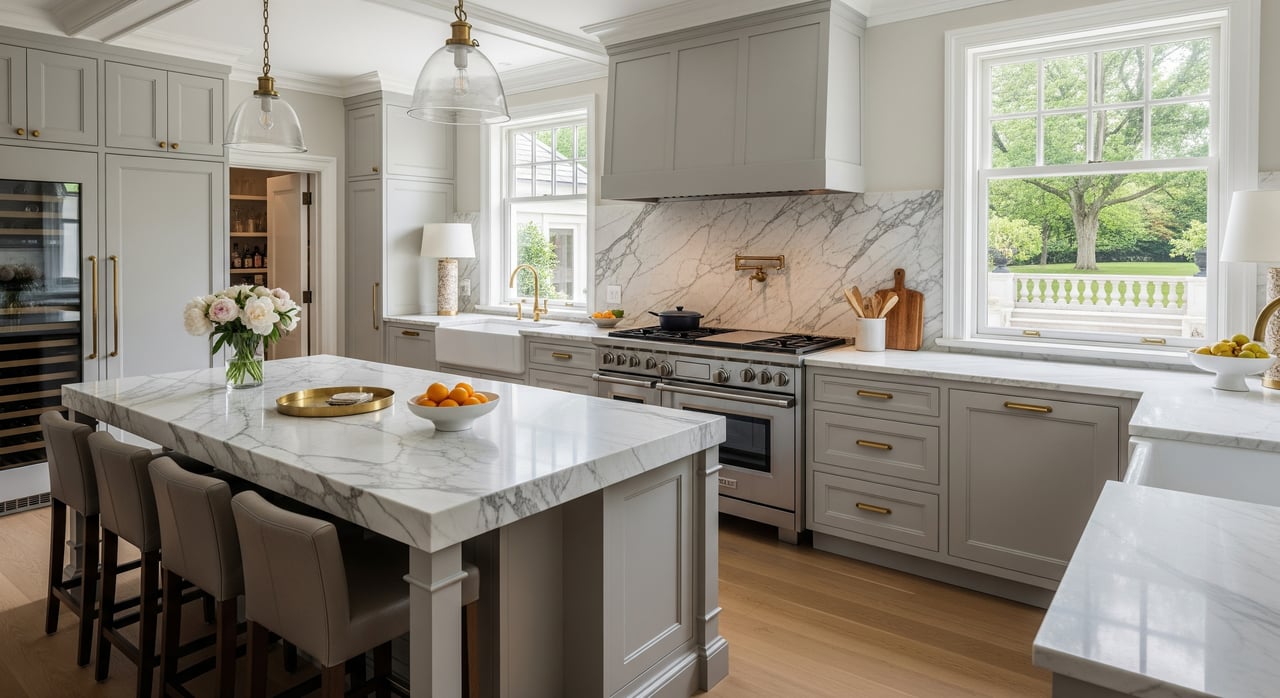
Hosting holidays one weekend and a backyard barbecue the next? In Potomac, your kitchen has to pull double duty while still looking flawless. You want spaces that handle prep out of sight, flow to the outdoors, and impress when guests gather around. This guide shows you the luxury kitchen features buyers in 20854 prioritize, with right-sizing tips, planning steps, and permit cues for Montgomery County. Let’s dive in.
What Potomac buyers prioritize
Potomac buyers value kitchens that support both formal entertaining and casual gatherings. That often means a clean, quiet main kitchen and separate service areas for prep and staging. Multi-cook layouts, high-quality appliances, and flexible storage are must-haves. Many homes have room to expand, but even within existing footprints, careful planning can deliver a luxury feel.
Sculleries and butler’s pantries
What it is and why it matters
A scullery or butler’s pantry is a concealed work zone for prep, cleanup, and staging. It helps keep the main kitchen guest-ready during events. In larger homes, it also supports professional catering workflows.
Right-size it for your home
You can fit a linear scullery in as little as 6 to 8 feet for tight renovations. For full function with a sink and dishwasher, target 8 to 12 feet or more. Common locations include between the kitchen and dining room, adjacent to a mudroom, or near a garage service entry.
Plan the mechanics
Add dedicated plumbing and electrical for extra sinks, dishwashers, and undercounter appliances. If you include a cooktop, plan proper ventilation and make-up air. Confirm loads and clearances early to avoid rework.
Integrated refrigeration and appliance panels
The appeal
Paneled, full-height refrigerators and freezers create a seamless cabinet wall. Concealed dishwashers and integrated coffee or wine systems elevate the look and support resale expectations in the luxury segment.
Planning tips
Account for service access, ventilation, and panel weight when specifying cabinet fronts. Many integrated units require dedicated circuits and precise clearances. Build appliance specs into your cabinetry drawings up front to control cost and schedule.
Oversized, multi-function islands
Seating and sizing that works
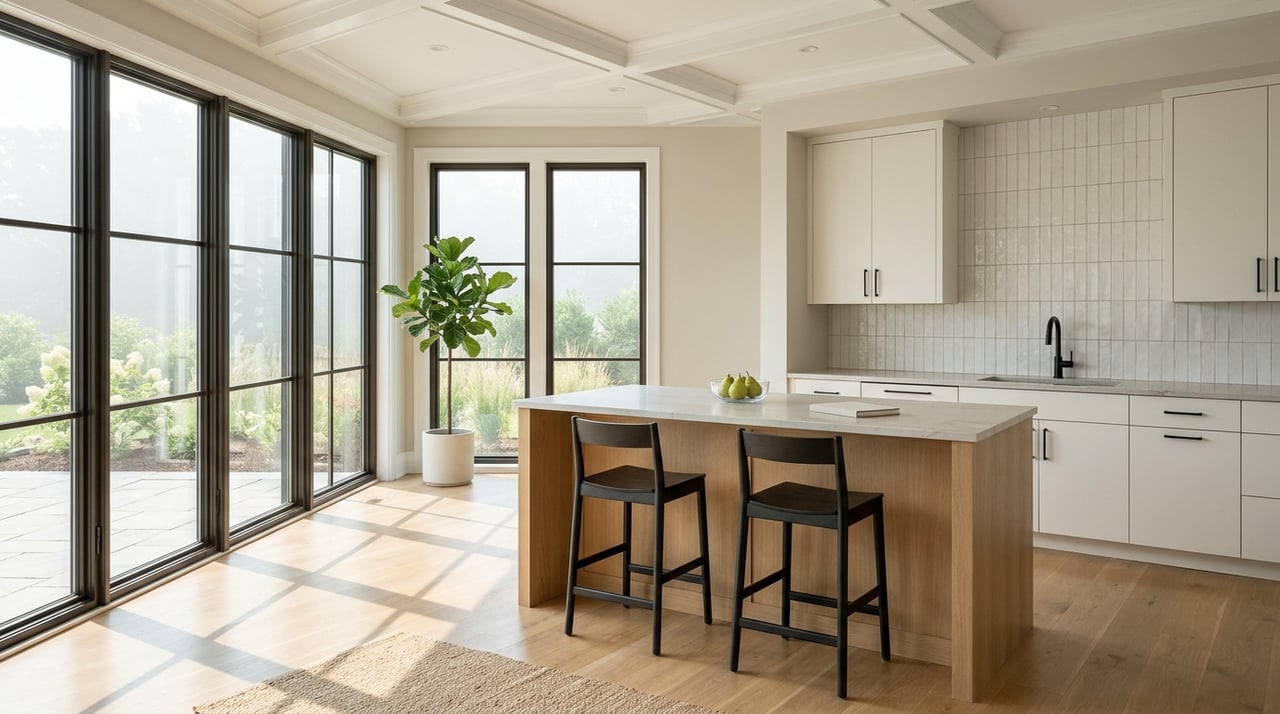
Islands are the social center. For four seats plus prep, plan 8 to 10 feet in length. Allow 24 to 30 inches per person of linear seating and a 12 to 18 inch knee overhang. Depth of 4 to 5 feet or more supports both seating and work zones. Maintain 42 to 48 inch aisles around the island in single-cook layouts and up to 48 to 60 inches for multi-cook traffic.
Structure and utilities
Large stone tops may need reinforcement. If you integrate a sink, cooktop, or refrigeration drawers, plan plumbing, electrical, and a venting strategy early. Coordinate hood placement and duct paths before framing.
Walk-in pantry rooms
Features buyers love
Dedicated pantry rooms bring order and capacity. Adjustable shelving, appliance counters for small appliances, and beverage or wine stations keep the main kitchen clear. Secondary refrigeration or freezer units are popular for bulk storage.
Sizing and access
Even a 3 by 6 foot dedicated pantry cabinet is an upgrade. Walk-ins are highly functional starting around 6 by 6 feet and can scale to 10 by 10 feet or larger in new builds. Choose pocket, barn, or full-height doors for clean access. If you add refrigeration or wine storage, plan ventilation, insulation, and temperature control.
Indoor-outdoor serving solutions
Openings and flow
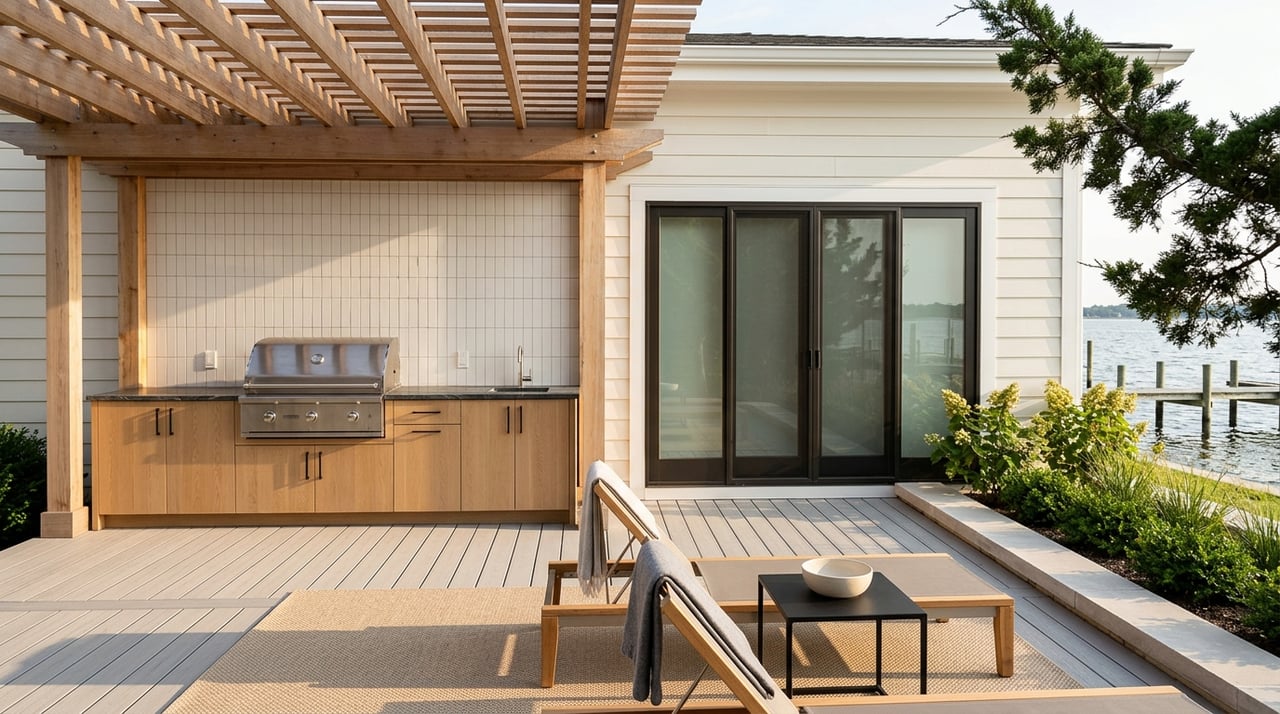
Buyers want kitchens that connect to patios and terraces with sliding or folding doors, pass-through windows, or serving counters. Covered outdoor kitchens extend usable space and make hosting easier.
Climate-ready details
Potomac’s four seasons call for weather-ready design. Covered or partially enclosed outdoor rooms, screens, and patio heaters extend usage into spring and fall. Large openings require proper structural headers, flashing, and drainage. Plan for gas, electrical, and dedicated circuits for outdoor appliances and lighting. Many outdoor and structural elements require permits through Montgomery County.
Other high-impact luxury touches
- Wine storage or conditioned wine rooms
- Beverage and coffee stations with built-in espresso and undercounter refrigeration
- Dual dishwashers or drawer dishwashers for high-volume cleanup
- Professional ranges or induction cooktops with high-capacity ventilation
- Touchless fixtures, layered lighting, and smart appliance controls
- Durable surfaces like quartzite, marble, or engineered quartz; wide plank wood or large-format tile flooring
- Energy-smart upgrades such as induction, ENERGY STAR appliances, LED lighting, and efficient HVAC for conditioned storage
Plan your project like a pro
Start with a clear brief
Define how you entertain, how many cooks you need to support, storage goals, and which rooms should be adjacent to the kitchen. Decide where scullery, pantry, and mudroom zones fit best.
Audit structure and systems
Verify electrical service capacity, plumbing chase locations, and framing before you finalize layout. Heavy islands and large openings need early structural planning.
Coordinate permits early
Structural changes, plumbing, major electrical upgrades, gas work, and HVAC changes typically require permits with Montgomery County. Engage the permitting process early to keep your timeline on track.
Lock in appliances first
Appliance specifications drive cabinetry, ventilation, and electrical. Select brands and sizes early so your design, shop drawings, and trades align.
Build the right team
Choose a builder and subcontractors experienced with custom cabinetry, panel-ready appliances, stone installation, and conditioned storage rooms. Integrated systems and luxury appliances require precise coordination to protect warranties.
Schedule and budget with margin
Expect longer lead times for custom cabinetry and premium appliances. Set a contingency for older homes where hidden issues can impact scope and schedule.
Resale in 20854: design for broad appeal
Focus on neutral, high-quality materials that age well. Prioritize flexible service spaces like sculleries and pantry rooms that work for both intimate dinners and large gatherings. Avoid highly personal finishes that limit buyer appeal.
Ready to translate your vision into a kitchen that performs beautifully for every event? Our team partners closely with architects and designers, offers transparent phased budgeting, and provides principal-level oversight from feasibility through construction. If you want a design-forward, disciplined process for your Potomac renovation or new build, Schedule a Feasibility Consultation with Chesapeake Custom Homes & Development.
FAQs
Which adds more resale value in Potomac: a scullery or a larger pantry?
- Both add value. Sculleries support clean sightlines and entertaining, while large walk-in pantries deliver storage and staging. In 20854, sculleries are highly appealing, but a well-designed pantry also ranks high.
Are paneled refrigerators worth the cost in luxury kitchens?
- For high-end buyers they often are. Integrated refrigeration creates a seamless look expected in luxury builds and can support resale, provided you plan for service access and proper ventilation.
How big should a kitchen island be to seat four comfortably?
- Plan for at least 8 to 10 feet in length with 24 to 30 inches of seating width per person and a 12 to 18 inch overhang. Keep 42 to 48 inch aisles around the island for good circulation.
What permits are required for a kitchen remodel in Montgomery County?
- Structural work, new or rerouted plumbing, major electrical upgrades, gas line changes, and HVAC modifications typically require permits. Contact county permitting early to confirm requirements and timelines.
How do I weatherproof indoor-outdoor serving areas for Potomac’s climate?
- Use covered outdoor rooms, weather-rated doors or windows, proper flashing and drainage, and consider patio heating for shoulder seasons. Plan utilities and structural headers during design to avoid delays.